The system
The reformer is the most recognized piece of Pilates equipment, but it is one of more than a dozen apparatus and props Joseph Pilates designed — chairs, barrels, a wall-mounted unit, a standing tower, and small props.
This page defines each apparatus and the manufacturers whose names appear on studio listings. Inventory varies with space, tradition, and class format; more apparatus does not make a studio better.
Large apparatus
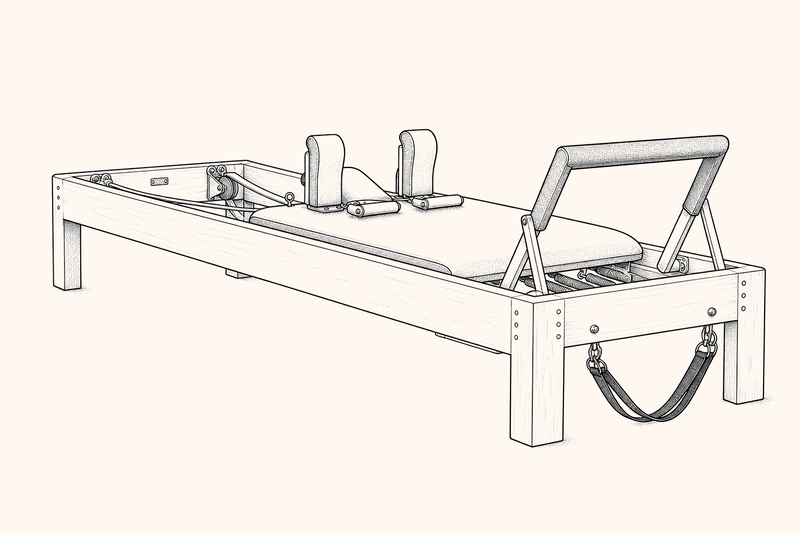
Reformer
A sliding carriage on a frame, with adjustable spring resistance, footbar, straps, and shoulder rests. The workhorse of most studios and the apparatus most readers encounter first. Joseph Pilates called it the “Universal Reformer”; it was the first piece of equipment he invented (Pilates Anytime).
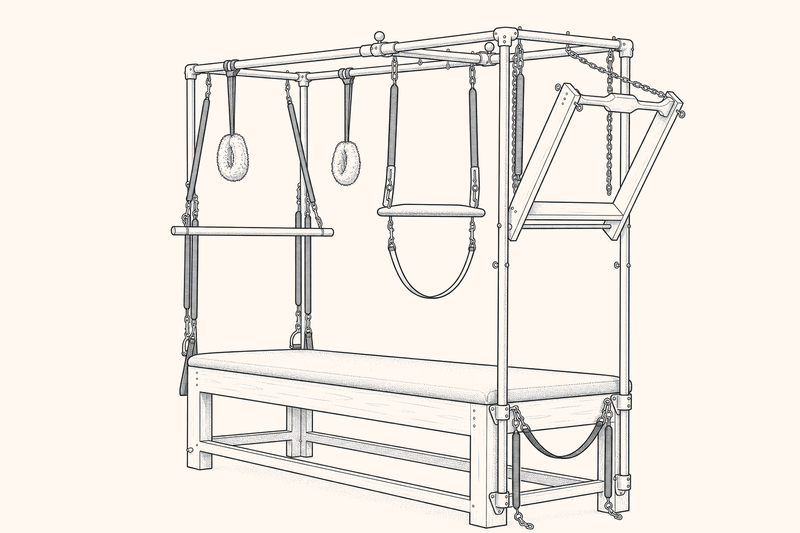
Cadillac (Trapeze Table)
A raised padded table with an overhead frame strung with springs, a push-through bar, a trapeze, and a roll-down bar. The Cadillac covers everything from gentle rehabilitation to advanced acrobatic work. Classical studios call it the Cadillac; contemporary studios use Trapeze Table.
Chairs
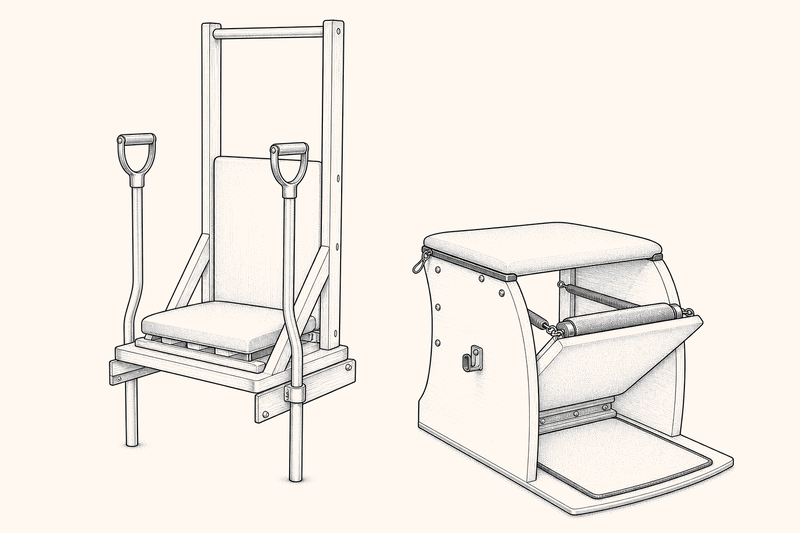
Pilates designed several chair-shaped apparatus — originally “furniture that doubled as exercise device” (Gratz Pilates) — each with a different role.
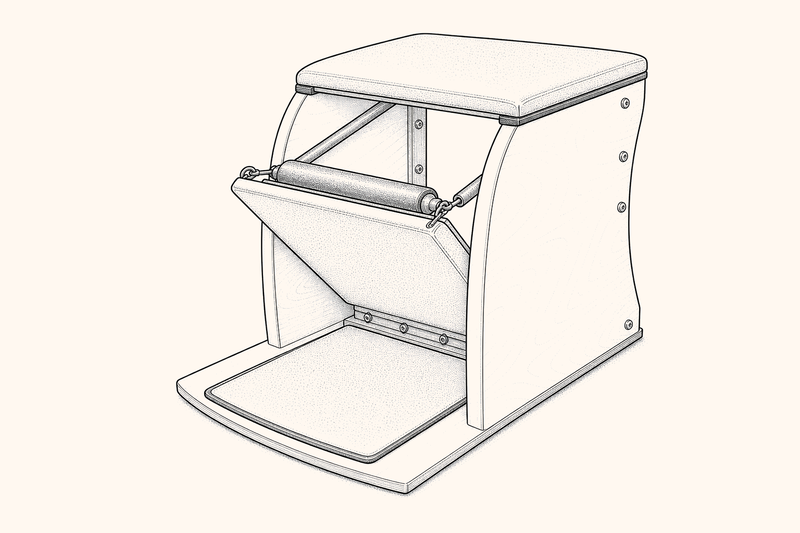
Wunda Chair
A compact apparatus with a small padded seat and a hinged, spring-loaded pedal. The Wunda Chair was patented in 1934 (Gratz Pilates) and is one of the most demanding pieces in the system; the repertoire is short on supports.
Small Arm Chair
A short upholstered chair with light springs anchored at shoulder height. The Small Arm Chair is built for upper-body, scapular, and postural work; springs come from above rather than from a pedal. Often called the Baby Chair.

Electric Chair (High Chair)
A taller chair with a high backrest, two side handles, and a spring-loaded pedal at the base. The Electric Chair is built for upright work: the back and handles let the user sit, stand, or kneel while pressing the pedal. Less common than the Wunda Chair.
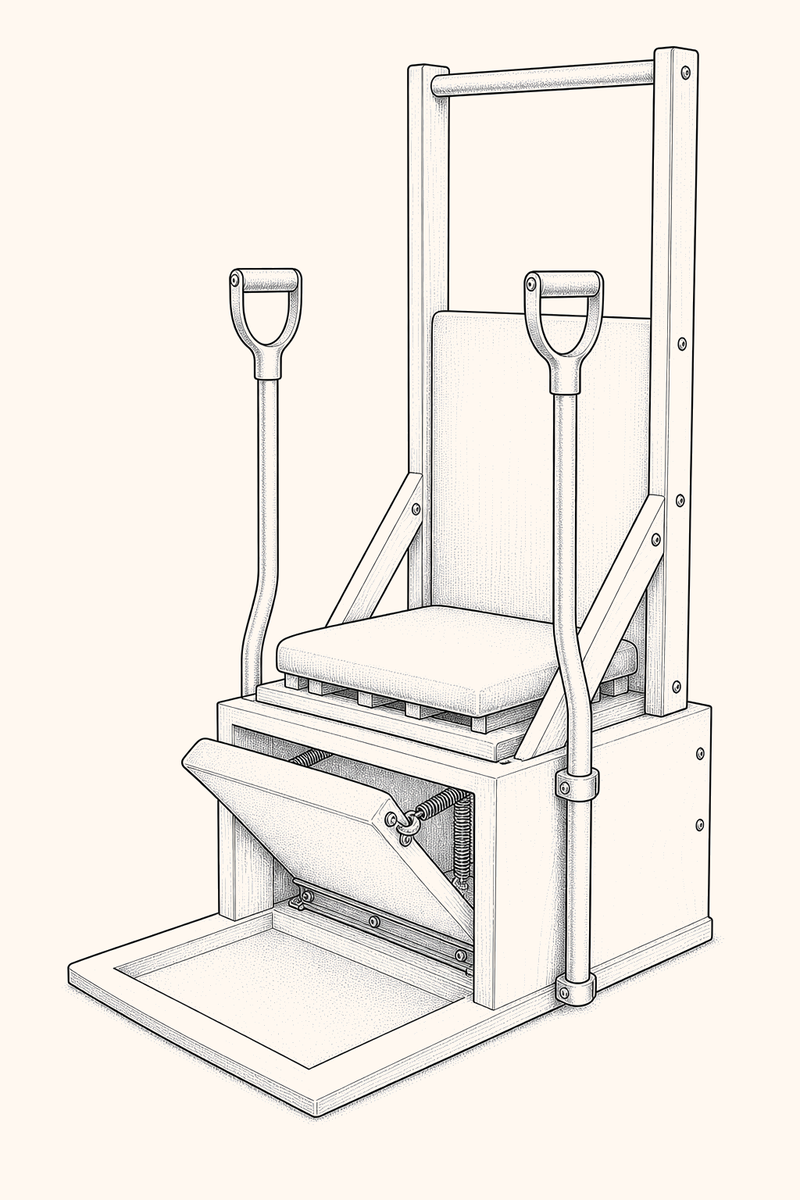
Combo Chair
A single chair frame doing the work of both the Wunda Chair and the Electric Chair, with a removable high back and handles. Gratz markets its version as a “two-in-one piece of apparatus” (Gratz Pilates). Useful where floor space is tight.
Barrels
The barrels share a curved surface matching the natural shape of the spine. Three sizes, different exercises.
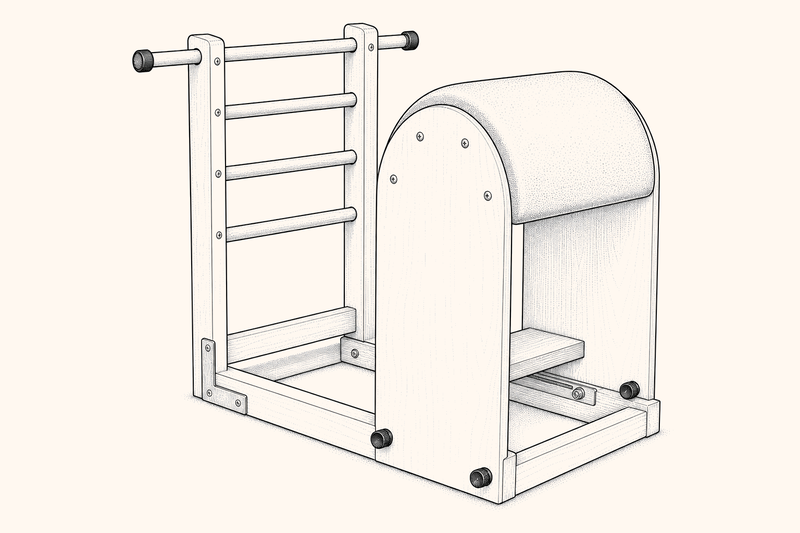
Ladder Barrel
The largest barrel: a half-cylinder mounted to a short freestanding ladder. The Ladder Barrel covers spinal articulation, stretching, and standing strength work; the user lies, kneels, or stands against the curve while gripping the rungs.
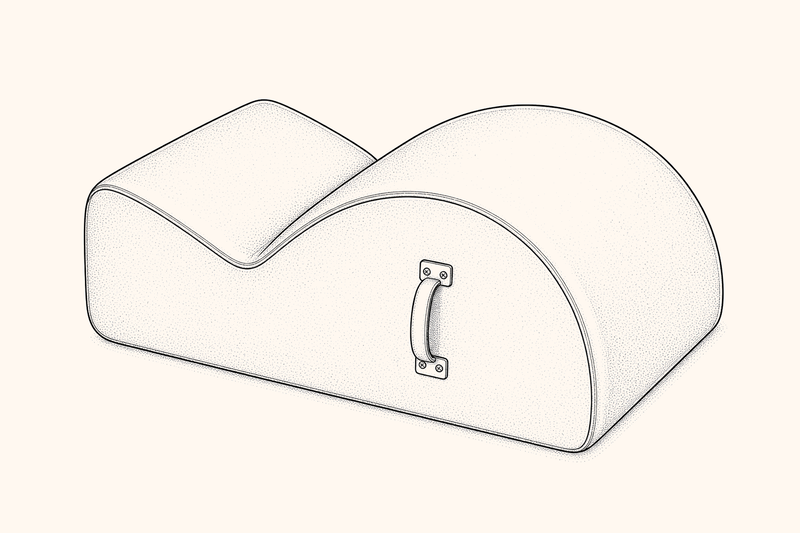
Spine Corrector
A low curved barrel joined to a flat upholstered step, with side handles. The step distinguishes the Spine Corrector from the freestanding Small Barrel. Used for spinal articulation, abdominal, and chest-opening work.
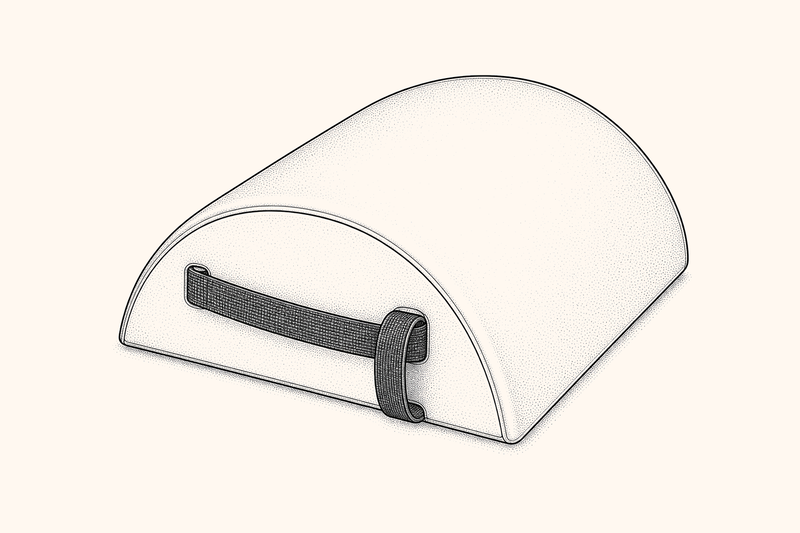
Small Barrel
A freestanding wooden half-barrel sized for the lower back, without ladder, step, or handles. The Small Barrel is the most portable of the three, used for spinal mobility and hip opening.
Wall and tower apparatus
Studio Wall Unit
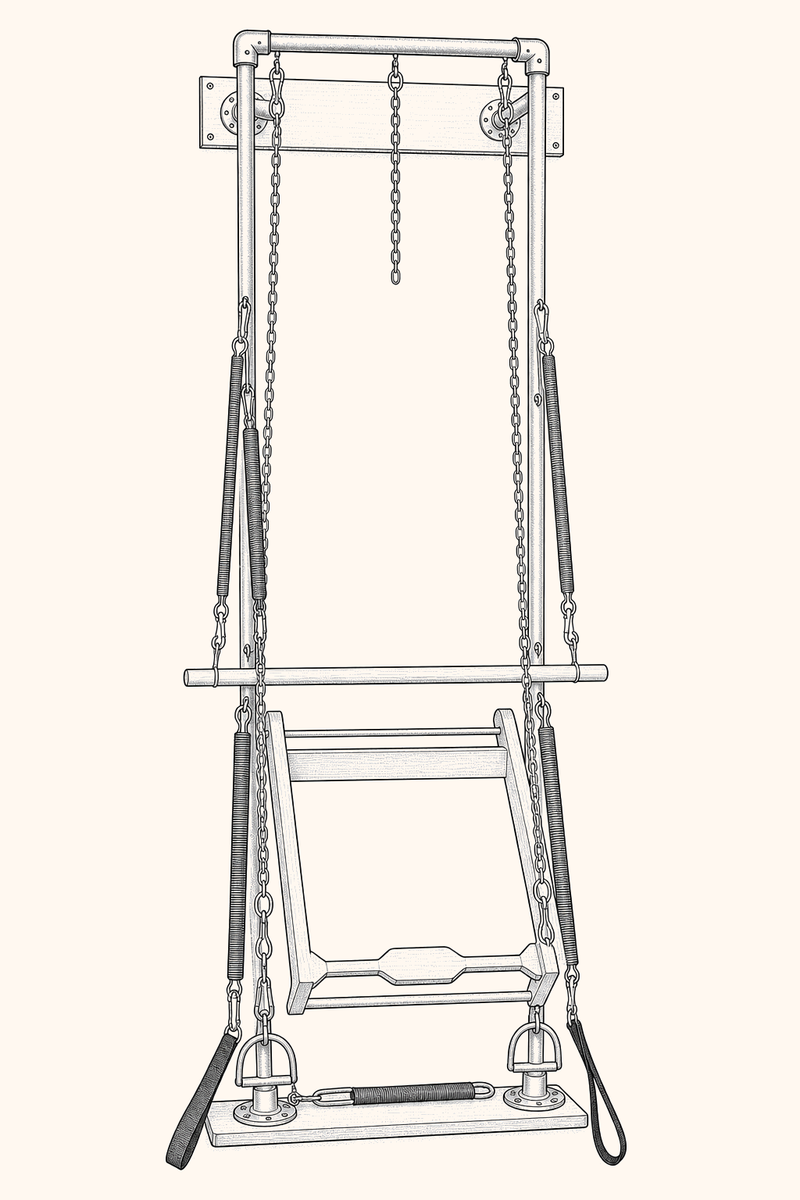
A vertical frame anchored to the wall and floor, fitted with the bars and springs of a Cadillac in a smaller footprint. Gratz describes it as bringing “Cadillac-inspired functionality into even the most space-conscious environments” (Gratz Pilates). Common where classical studios are short on floor space.
Guillotine Tower
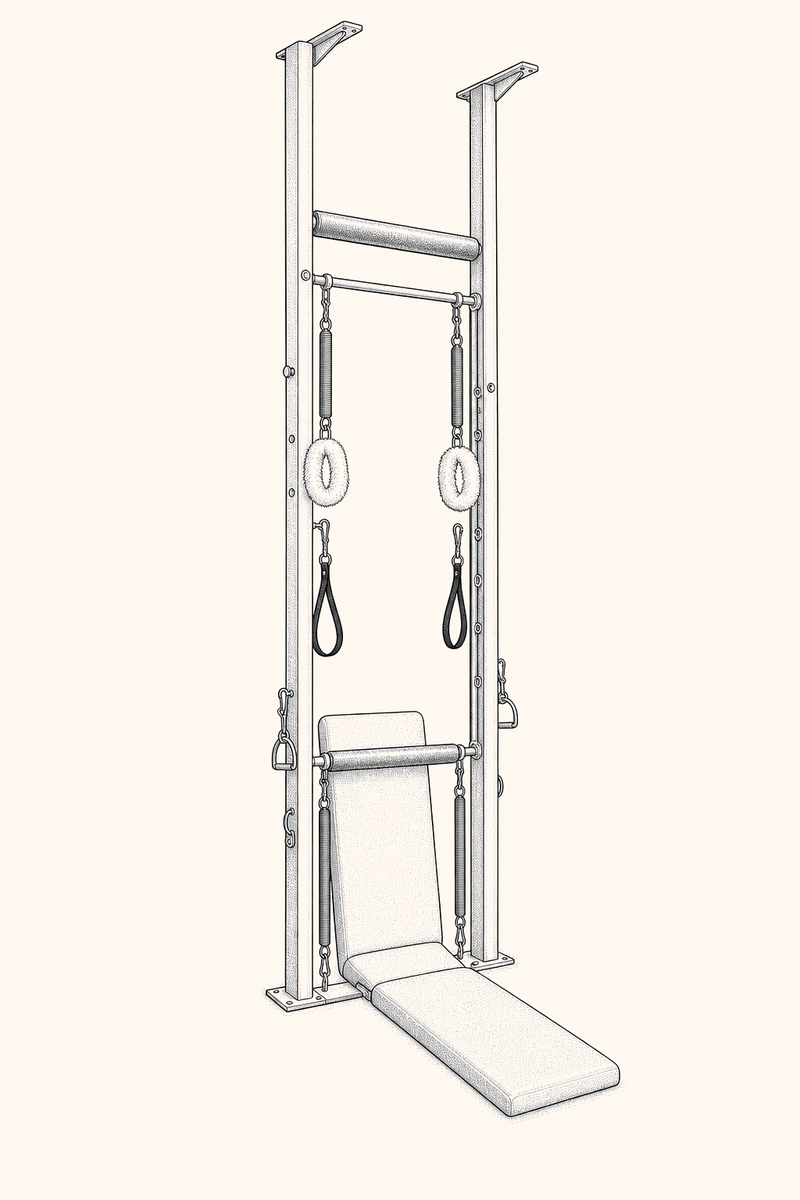
Two tall vertical posts framing a horizontal sliding bar that drops and rises on springs; the user lies, sits, or stands on a mat between them. The Guillotine was a fixture in Joseph Pilates’s original studio and is uncommon today.
Pedi Pole
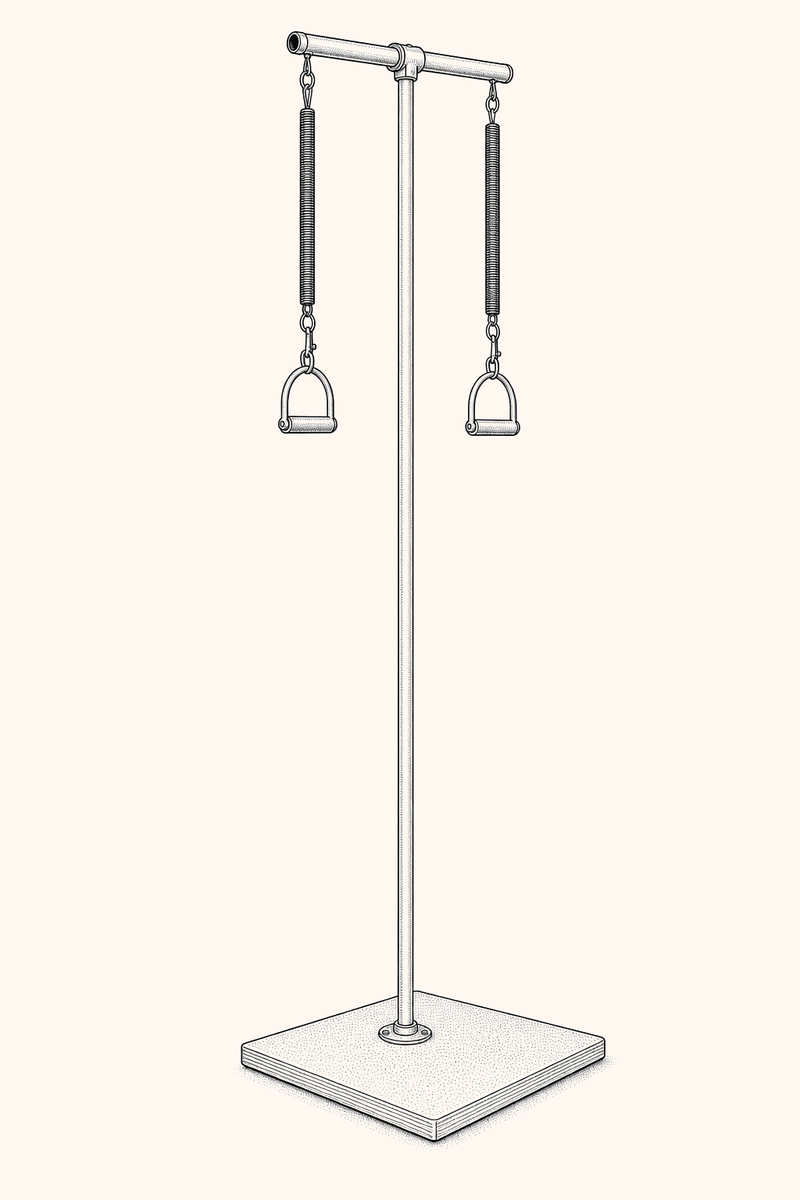
A vertical pole on a small square base, with two springs and handles at shoulder height. The Pedi Pole is used for standing upper-body and postural work. Also the Ped-O-Pull.
Small props
Pilates Mat
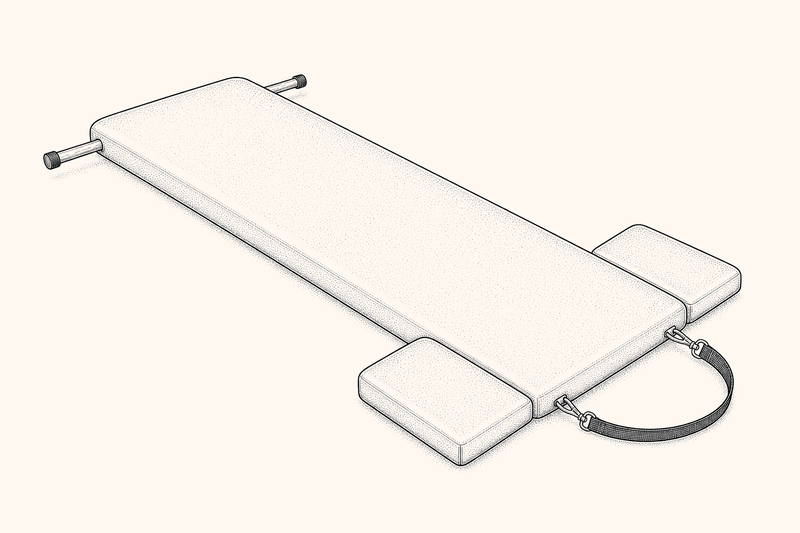
A thick padded mat, longer and firmer than a yoga mat. Pilates designed the mat exercises before any apparatus; they remain the foundation of the method. Often combined with props such as the Magic Circle, hand weights, or a small ball.
Magic Circle
A flexible padded ring roughly fourteen inches across, squeezed between hands, ankles, or thighs for resistance and proprioceptive feedback. A Joseph Pilates invention, widely used in mat and apparatus classes.
Foot Corrector
A small base with a curved saddle mounted over a calibrated spring; the user presses the saddle down with the arch of the foot. The Foot Corrector strengthens the arches and refines weight distribution.
Toe Exerciser
A compact spring loop sized for the toes, used to flex them against light resistance. Strengthens the intrinsic muscles of the foot. Also called the Toe Corrector.
Bean Bag Roll-Up Device
A short wooden dowel with a cord ending in a small weighted sack. Winding and unwinding against the weight trains grip, wrist, and forearm strength.
Breath-A-Cizer
A wooden handle holding a small metal air channel and a paper pinwheel; exhaling steadily keeps the pinwheel turning, training breath control. Grouped in the glossary as Sand Bag, Breath-A-Cizer, Bean Bag.
Contemporary modifications
Several apparatus designed after Joseph Pilates’s death replicate Cadillac functionality in smaller footprints or extend the system into new movement domains. Classical practitioners distinguish them from the originals — a tradition difference, not quality.
Tower
A wall-mounted unit pairing with a mat or reformer to provide push-through bar, spring, and roll-down bar work in a smaller footprint than a full Cadillac. The Tower is now nearly ubiquitous in contemporary studios.
Springboard
A wall-mounted board with springs and attachments — Tower-like functionality in a smaller, less expensive form. The Springboard was developed by Ellie Herman and is produced by Balanced Body.
CoreAlign
A standing apparatus with two parallel sliding tracks, for upright functional movement. The CoreAlign is produced by Balanced Body and is not part of the classical repertoire.
Manufacturers
Manufacturer matters more in classical contexts, where fidelity to Joseph Pilates’s original specifications is part of the method. Contemporary studios use a wider range and place less weight on the brand.
Gratz
Gratz is the longtime classical manufacturer, building reformers, Cadillacs, chairs, and accessories to Joseph Pilates’s original specifications. The standard in classical studios. gratzpilates.com
Pilates Designs
Pilates Designs is an NYC-based classical manufacturer founded by Sylvia Adamopoulos and the late Basil Blecher. Often referenced alongside Gratz. pilatesdesigns.com
Balanced Body
Balanced Body is the largest contemporary manufacturer, based in Sacramento, with a wide range of equipment and a major teacher training program. pilates.com
Contrology by Balanced Body
Contrology by Balanced Body is a classical-specification line produced with Pilates Elder Jay Grimes — a classical line from a contemporary manufacturer. contrology.pilates.com
Merrithew (STOTT PILATES)
Merrithew is a Toronto-based equipment and education company; its equipment pairs with the contemporary STOTT PILATES methodology. merrithew.com
Peak Pilates
Peak Pilates is an equipment manufacturer paired with the Peak Pilates curriculum; owned by Mad Dogg Athletics. peakpilates.com
A note on Lagree
Some studios offer classes on a Megaformer, used in Lagree Fitness. The Megaformer is visually similar to a reformer but is a different machine, and Lagree is a separate exercise system — not Pilates. Some studios market Lagree-style classes as “reformer Pilates,” which can mislead. Worth clarifying before booking.